Featured project01
SarataniAI
AI-assisted cervical cancer screening, built for earlier detection and more accessible clinical decision support.
Computer visionCervical screening
Visit SarataniAI Physician · Researcher · Builder
Medical Doctor · AI Researcher · Health-Tech Entrepreneur
Building intelligent technologies for earlier diagnosis, better clinical decisions, and more accessible healthcare.

Building clinically useful AI for resource-constrained healthcare environments, while completing an MSc in Artificial Intelligence for Medicine and Health at the University of Bristol.
Updated 2026I work at the intersection of medicine, machine learning, medical imaging, and global health. My interest in AI grew from seeing how delayed diagnosis, limited specialist capacity, and unequal access to healthcare technology shape patient outcomes.
Today, I develop practical systems that can support healthcare professionals in settings where infrastructure, connectivity, and compute cannot be assumed. The goal is not technology for its own sake, but tools that are useful, explainable, and close enough to clinical reality to matter.
Read my journeyCurrently exploring
SarataniAI
Cervical cancer is highly preventable when detected early, but screening systems in many low-resource environments face limited pathology capacity, long diagnostic turnaround times, and unequal access to specialists.
SarataniAI applies computer vision and deep learning to cervical cytology and visual screening images, supporting healthcare professionals with faster screening and diagnostic decision support.
Explore SarataniAI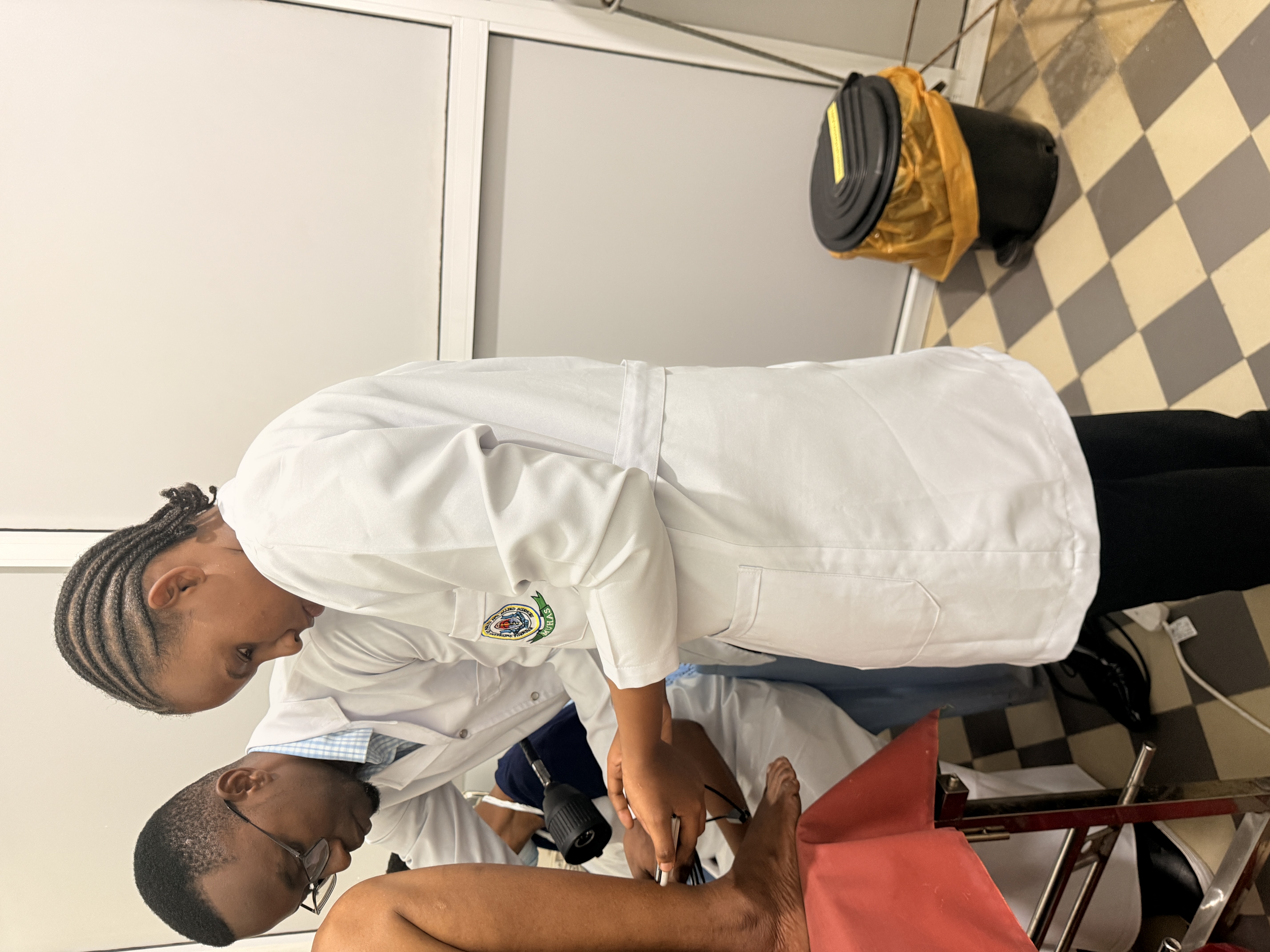
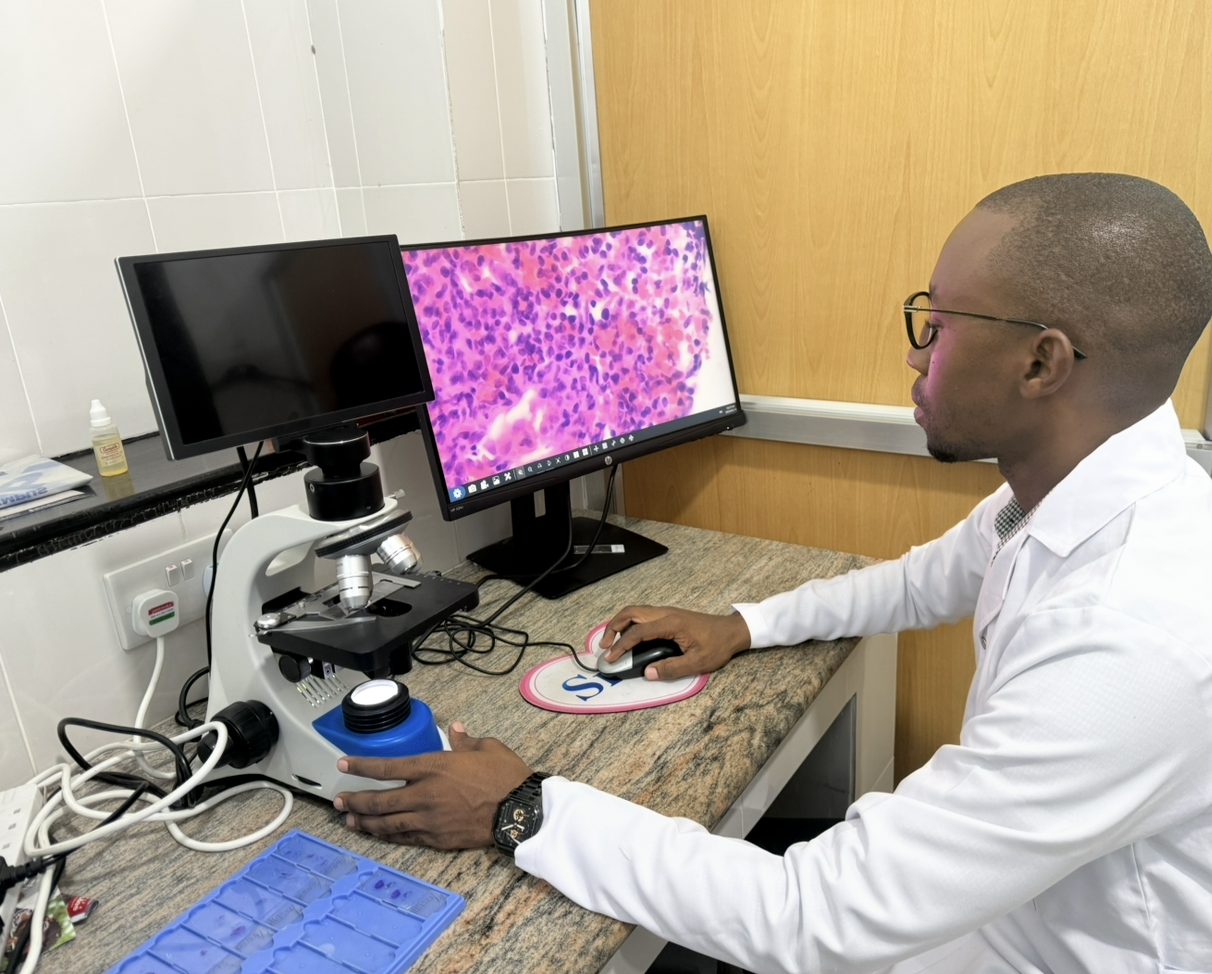
Computer vision · Deep learning · Clinical decision support
My research explores how artificial intelligence can move from promising algorithms to clinically useful tools in real healthcare environments.
AI-assisted cervical cancer screening, built for earlier detection and more accessible clinical decision support.
Digital labour monitoring and clinical decision support aligned with maternal-care workflows.
A Tanzanian cervical cytology image dataset supporting locally grounded research in medical imaging.
My work moves between clinical questions, technical systems, and the people who need them to work. Each chapter informs the next.
Benchmark performance is only the beginning. In real clinical environments, cost, workflow, infrastructure, trust, explainability, and accessibility determine whether an innovation actually improves care.
Delayed diagnosis is rarely about a single missing test. It is about workflows, capacity, and access — and why AI has to meet all three to matter.
Read articleNotes on designing computer-vision tools that assume limited specialists, unreliable connectivity, and modest compute — without compromising on safety.
Read articleA model that wins on a benchmark can still fail in clinic. What it actually takes for a promising algorithm to become a clinically useful tool.
Read articleI'm interested in collaborations across medical AI, clinical research, computer vision, global health, and responsible healthcare innovation.